
The advisory board
Five members, one from each corner of the Canadian QE field, who review the methodology annually. The board is advisory: it informs our decisions, it does not govern them. SQALogic operates the benchmark; the board strengthens that work through structured external review.
That advisory property is exactly what makes cross-category membership possible, a peer firm or a competing vendor can sit on an advisory board without commercial conflict. Disagreement is a feature, not a breakdown.

SQALogic built this benchmark, and the methodology stays ours: the questions, the scoring, the segmentation, and the final call on all three. The board exists because work that measures a field should be reviewed by that field. Five practitioners, five vantage points, one working session a year, and a standing invitation to tell us where we're wrong. — David Milette, Co-Founder, SQALogic
This board reviews our methodology; the product behind it is built to the same standard. How we build CareLogic →
The five members

Greg Cento is Assistant Vice-President, Enterprise Quality Engineering Platform at Sun Life, where he leads the evolution of software quality practices and tooling across the global enterprise. He is responsible for integrating emerging technologies, including DevOps, API-driven platforms, and agentic AI, into operational environments to assure quality at speed. His career spans senior roles in information security, analytics, and enterprise program delivery, with accountability for major technology portfolios, vendor ecosystems, and financial governance. With more than two decades leading enterprise transformation programs, Greg brings a pragmatic, outcomes-driven approach to technology leadership and organizational capability development.
Greg runs enterprise quality engineering at the scale of a global financial institution, the kind of organization this benchmark has to be useful to or it means nothing. The client seat exists so the methodology answers to someone who lives with real delivery stakes every day. If a measure doesn't hold up against how quality works at that scale, he will tell us. — David Milette

Kayla Gillman is Director of Consulting at TTC Global and a recent STARCANADA speaker. Her work sits where quality engineering decisions actually get made: test-automation strategy, delivery, and the executive conversations that fund or kill both. She holds an Executive MBA from Xavier University and a computer science degree from the University of Cincinnati, and brings a practitioner's depth in test automation with a rare ability to bridge executive and delivery perspectives.
Kayla knows how QE decisions actually get made in Canadian organizations, and she says so plainly. The peer seat exists so this benchmark gets reviewed by someone with no reason to be gentle with it. She took the seat, which tells you something about her. — David Milette

Ari Rowland has led quality engineering and testing across Canada for over two decades, running nationwide QE practices for a major consultancy while staying hands-on with clients' hardest delivery challenges. Most recently he directed quality for one of the country's largest retail business-systems transformations. He is known for building diverse, low-attrition teams and a collaborative culture focused on excellence in a fast-changing field.
A benchmark of Canadian QE has to answer to the community it measures. Ari helped build that community. Through the CQTA he has spent years connecting practitioners across the country, and he has led QE at national scale without ever leaving the delivery floor. When the benchmark drifts toward what looks good over what teams actually live, he is the one who will say so. — David Milette
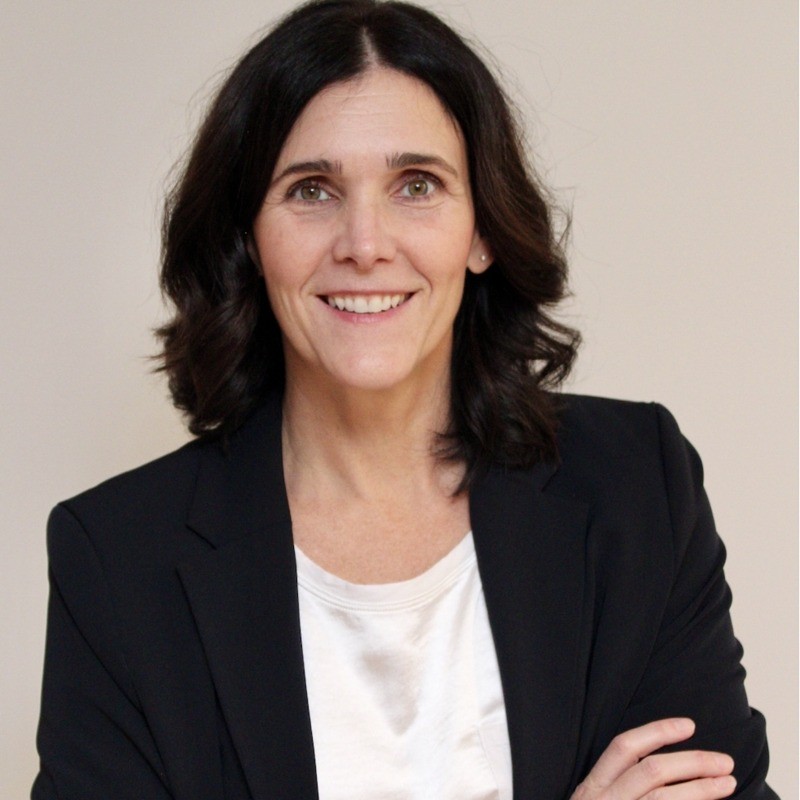
Julie Papineau has worked in software quality since 2001, spending her career advancing quality practices and helping teams build the confidence to deliver. A manager, coach, and trainer, she guides organizations through Agile, DevOps, and continuous-delivery transformations, leaning on collaboration, data, and continuous improvement. She also supervises the practicum in the software-quality specialist program at Collège de Bois-de-Boulogne, guiding Québec's next generation of QA specialists into the field. She believes quality should be a lever for both trust and speed: her work turns the uncertainty of delivery into informed decisions, continuous learning, and concrete value for clients.
Julie stands exactly where Québec's next quality professionals enter the field, supervising practicums in a college software-quality program while practising the craft herself. That gives her two vantage points on this benchmark at once: what the field teaches, and what the field actually does. If the two don't line up, she is the one who will notice first, and she will say so. — David Milette

Vanessa Henri is a cybersecurity and data protection lawyer whose practice spans product cybersecurity, applied cybersecurity law, and national defence, advising boards, CISOs, and founders on defensible risk decisions. She has advised Québec's first Minister of Cybersecurity and co-led Trade Secrets and National Security at Fasken, and served on the Black Hat CISO Advisory Board. She has been named among Canada's Top 20 Women in Cybersecurity since 2020 and was shortlisted in 2024 as one of the world's Top 3 women in cybersecurity law by the United Cybersecurity Alliance.
The benchmark makes promises about privacy before it makes any claim about quality: aggregate only, k-anonymity, Law 25 by design. Vanessa's seat exists so those promises get examined by someone qualified to reject them. Having her at the table raises the bar for us, which is the point. — David Milette
How members are selected
From Year 2, members are nominated by SQALogic from an open applicant pool against published criteria. The bias-prevention story rests on process transparency at every layer, not on promises.
Transparency on the record
Each member's seat note above says why they hold it. As open applications come online in Year 2, this page will also carry the anonymized applicant-pool aggregate (applications, organizations, provinces, category coverage), and each annual report will record the methodology changes the board informed and the topics it raised that we chose not to act on. Showing the “didn’t go forward” contributions is more credible than showing only the accepted ones.
Interim advisory board · by invitation, Year 1
The Year 1 board is interim, drawn from the Canadian QE network, with a transition to the open-application structure in Year 2. A roughly one-year commitment, one working session, no operational load, a seat that shapes the review function as it forms.
The board's role is advisory. SQALogic retains methodology authorship.
Applications open in Year 2